
Can you tell your XCM from your EDR? Think Observed Trials is something you need to call a lawyer for?
We’ve got you. Here’s a beginner’s guide to the most common disciplines of mountain bike that you’re likely to come across.
Keen to try one this season? Explore the AusCycling mountain bike calendar to find upcoming events.
Cross-country (XC)
What is it?
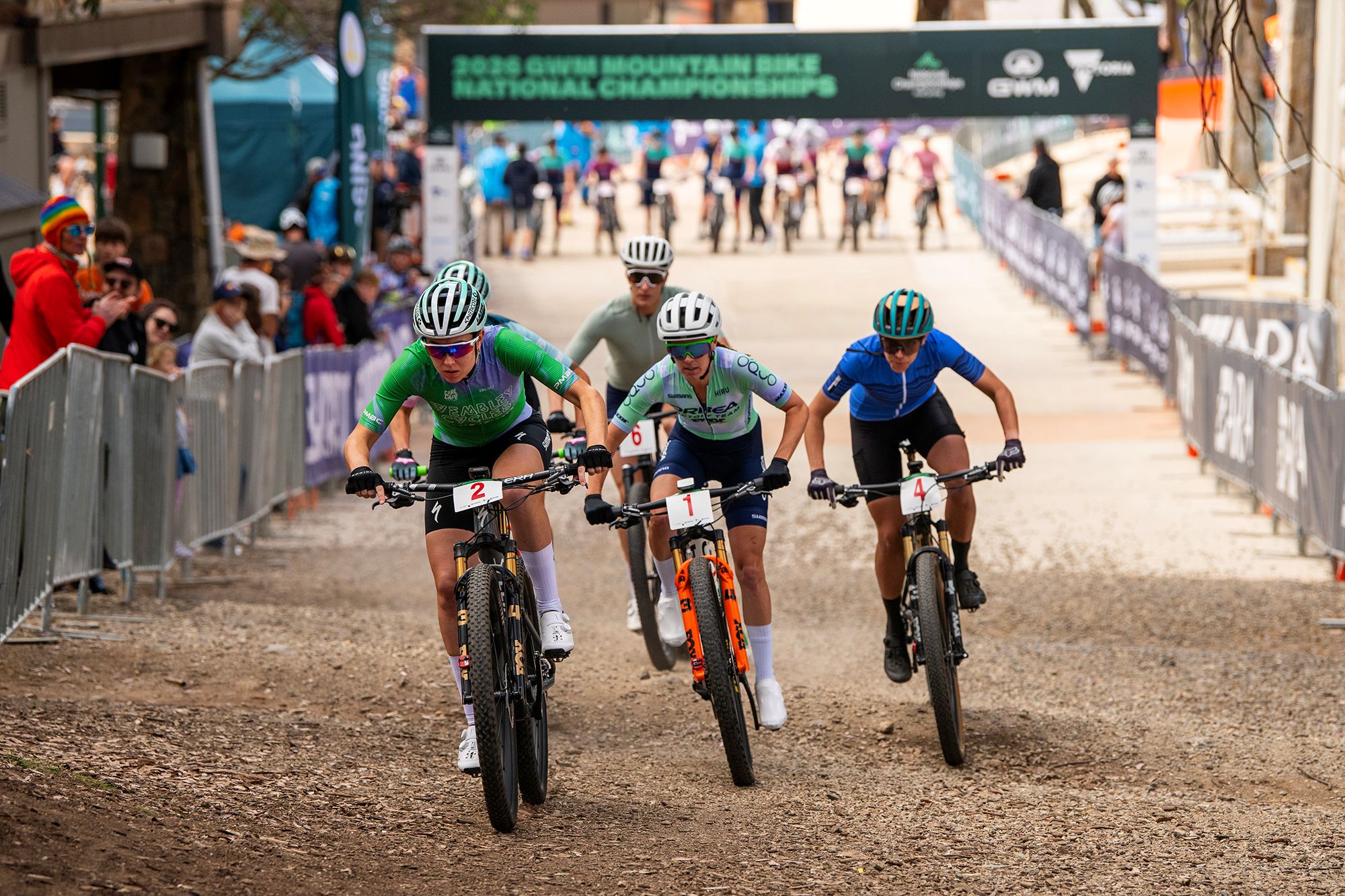
Cross-country is a category of mountain bike races that take place over repeated laps of a circuit. All riders start at the same time (mass-start), aiming to be first over the finish line after the required number of laps.
XC courses have a range of features that test both climbing and descending: rocky sections (‘rock gardens’), switchback turns, long and short climbs, and technical forested sections are all common.
Cross-country Olympic (XCO) is the race distance that’s included in the Olympic Games, taking place on a course between 4−6km in length and typically lasting between 1 and 2 hours.
Then there’s Cross-country Short Course (XCC), held on circuits less than 800 metres long and lasting about 25 minutes.
Cross-country Marathon (XCM) takes racing to the extremes of endurance, typically running for about 100km on much longer circuits – sometimes even on point-to-point courses.
There are also variants such as Cross-country Relay (XCR), a team event where each rider completes a single lap of the XCO course.
How does it challenge you?
Cross-country riders need good fitness and endurance to keep pedalling over a long period of time. The ability to climb well is valuable, as are bike-handling skills to navigate the technical sections, downhill segments and twists and turns of the course. Explosivity is an asset, helping riders get good position from the start line, and to overtake riders on narrow sections of the track.
What gear do you need?
A standard mountain-bike helmet – similar to a road helmet – allows for ventilation as well as protection. Aerodynamics and lightweight features do help, so you’ll often see XC riders in tight-fitting jerseys and shorts or even skinsuits, similar to road racing.
Cross-country bikes are efficient, helping riders go uphill quickly and downhill nimbly, with sharp handling and efficient power transfer from the pedals. Most modern XC race bikes have front and rear suspension, but plenty of riders still race on hardtails with no rear suspension.
Downhill (DH)
What is it?
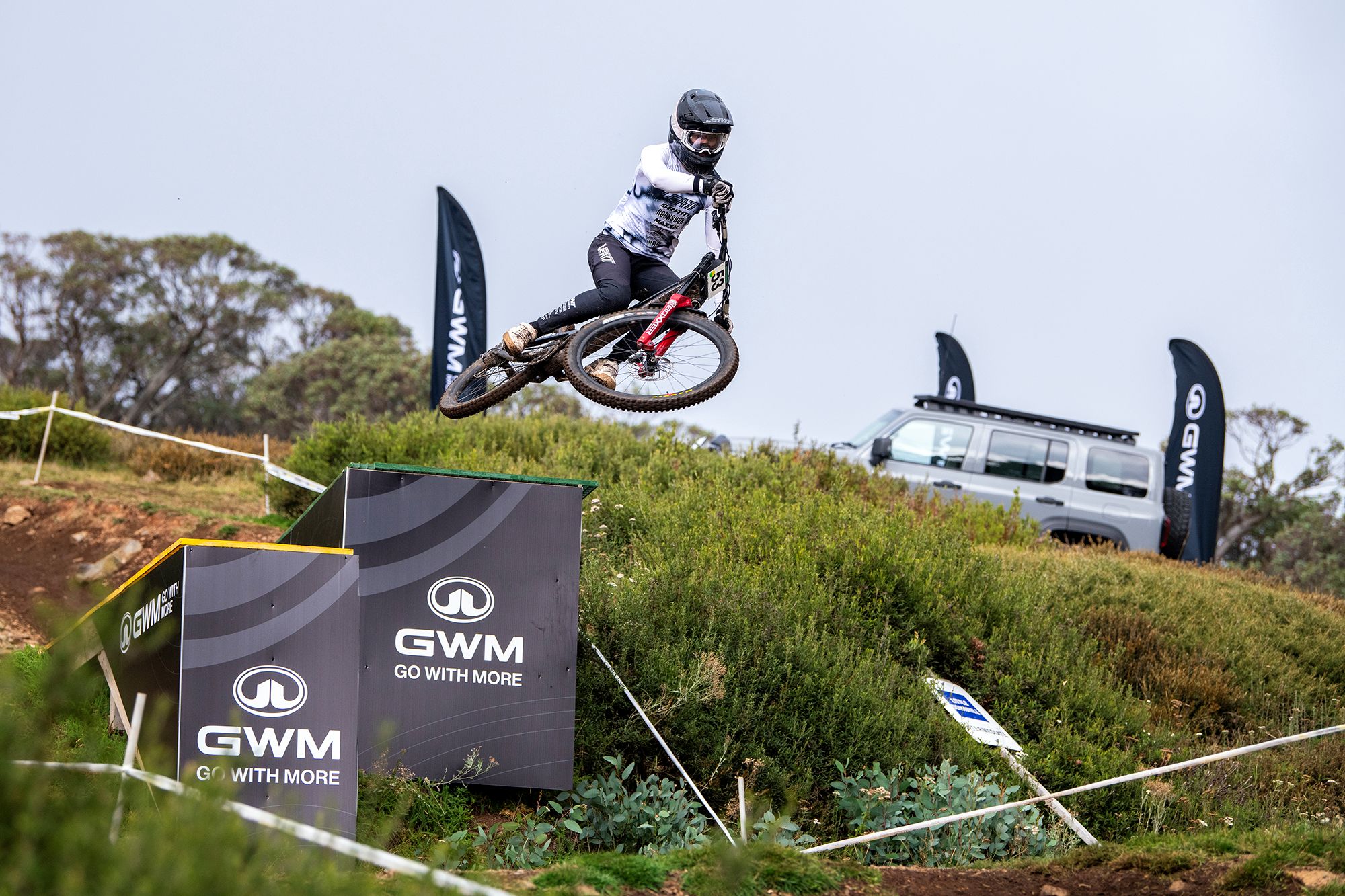
Downhill, or sometimes DHI (‘Downhill Individual’), is a point-to-point race: from the top of a mountain to the bottom.
This is a timed event where each rider sets off one-by-one. Starting at the top of the trail, the simple aim is to ride to the bottom in the quickest time possible.
How does it challenge you?
The best downhill riders need to be physically strong, technically skilful and mentally focused as they plummet down steep drops; tackle big aerial jumps; twist around slippery turns; and steer the bike through tricky rock-lined sections (‘rock gardens’) or tree-lined forests – braking only when strictly necessary!
The courses are between 1.5−3.5km long, designed so that the total race time is 2−5 minutes. Despite the short duration, Downhill is a full workout for upper and lower body as you wrestle the bike through all kinds of terrain.
What gear do you need?
A full-face helmet and goggles, long sleeves and lots of padding are absolute necessities. Specific DH race bikes have full suspension to absorb all the stress of the high-speed descent. They also have aggressive geometry to go downwards fast – but they’re not particularly great for pedalling uphill.
Enduro (EDR)
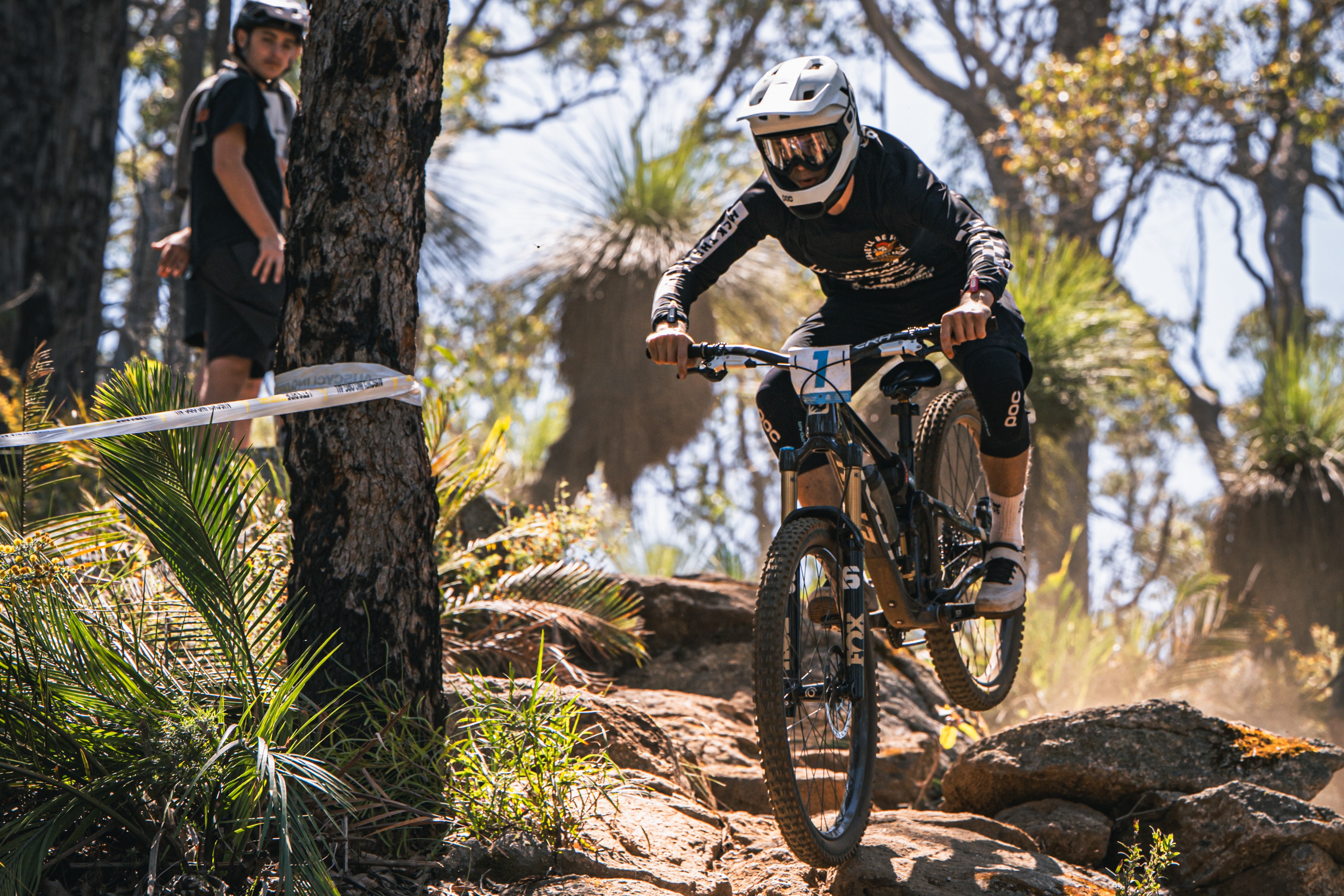
Photo: Dan Hoey / Broken Photography
What is it?
Enduro, or Gravity Enduro, merges the thrill of downhill racing with the fitness demands of cross-country.
Racing takes place over multiple downhill segments – called ‘timed stages’ or ‘special stages’ – where you aim to ride from the top to the bottom as quickly as you can. The time you take to complete each special stage is added together to decide your overall result.
However, unlike DHI, between each timed stage is a ‘liaison stage’ or ‘transfer stage’, where you must ride your bike – mostly uphill – to the start of the next segment. While transfer stages aren’t timed, there is an overall time limit in which you must complete the whole course, so you mustn’t dawdle too much!
How does it challenge you?
Enduro riders have the complete package: technical downhill skills and speed, and endurance to traverse all the stages.
They also need to be self-sufficient, carefully planning their food, water, equipment and clothing to get to the finish without outside assistance.
Importantly, enduro racing is explicitly about the spirit of community and adventure. Sure, it’s competitive, but having a great time on the mountain, and looking after each other, is unashamedly the focus here!
What gear do you need?
An enduro bike needs to handle the speed and stress of the downhills while being efficient enough to ride uphill. At beginner levels, a wide range of mountain bikes can be adequate – trail bikes, all-mountain bikes, as well as those specifically marketed as ‘enduro bikes’.
Depending on how demanding the course is, you usually can’t go wrong by wearing the kind of padding and protection you’d want in Downhill racing.
You also need to bring enough supplies – food, water, spares, clothing and tools – to get yourself through without external help.
Observed Trials (OT)
What is it?
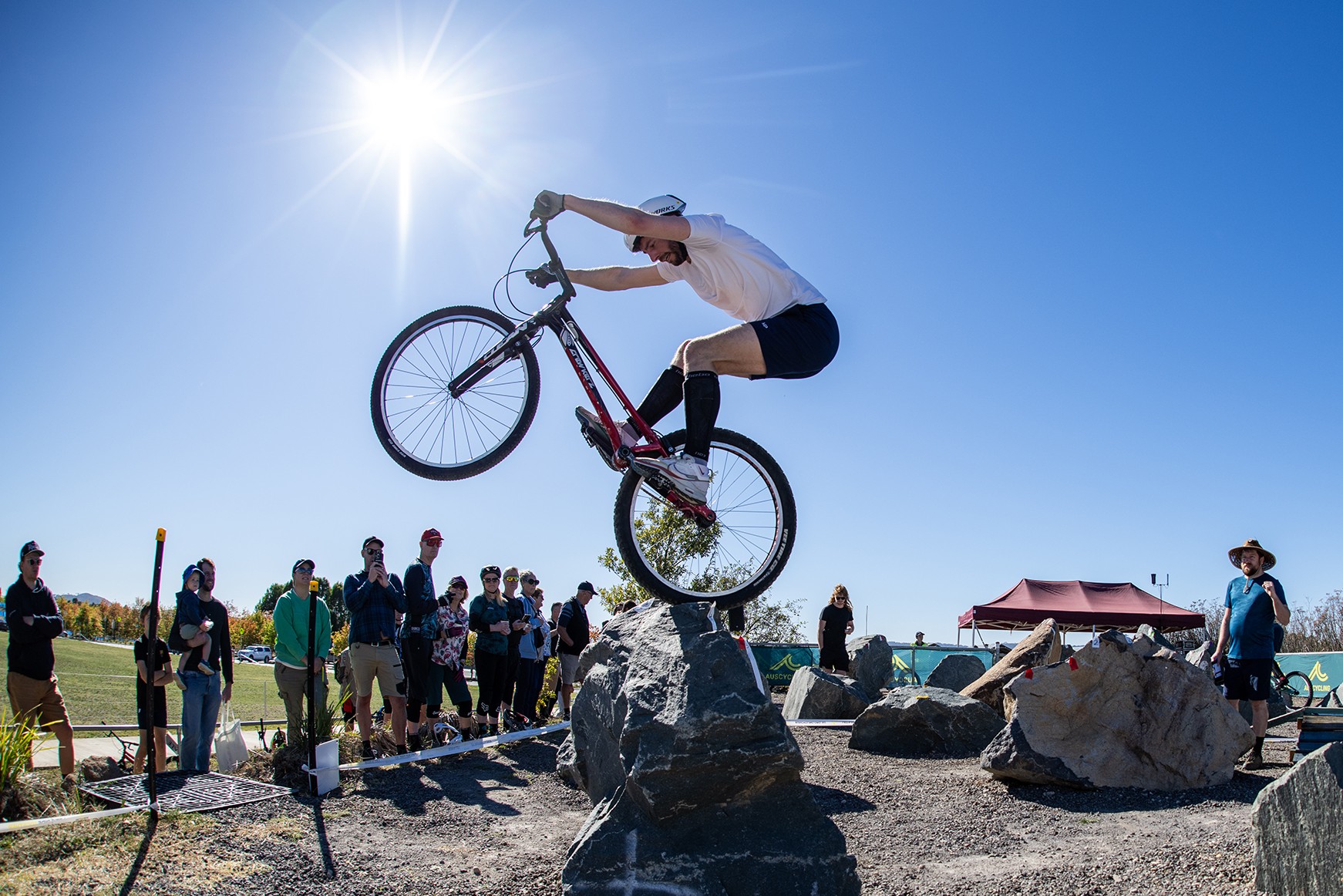
Observed Trials, or just Trials, is surely the most unique discipline on this list. Instead of racing for speed, Trials is a test of technical skill.
The event is held on an obstacle course, and the aim is to navigate the obstacles without falling off your bike.
Courses can be fully man-made, featuring concrete structures, poles and beams; or they can incorporate natural features such as rocks and logs.
Riders score points for navigating each section of the course; they lose points for putting a foot down (‘dabbing’) or falling back to the ground.
How does it challenge you?
Trials riders need a lot of skill. Balance, precise handling, brake control, and low-speed manoeuvring are prized abilities. Riders might need to hop on one or both wheels, trackstand, pivot in one spot, and use problem-solving abilities to tackle any sequence of obstacles.
What gear do you need?
Of all the disciplines listed here, trials has the lowest barrier to entry. You could theoretically start with any standard bike, though competitive riders will use modified BMX bikes stripped down to be more light and nimble. Put on a comfortable, loose-fitting top with shorts and a standard helmet, and you’re ready to give it a go.
E-mountain bike (E-MTB)
What is it?
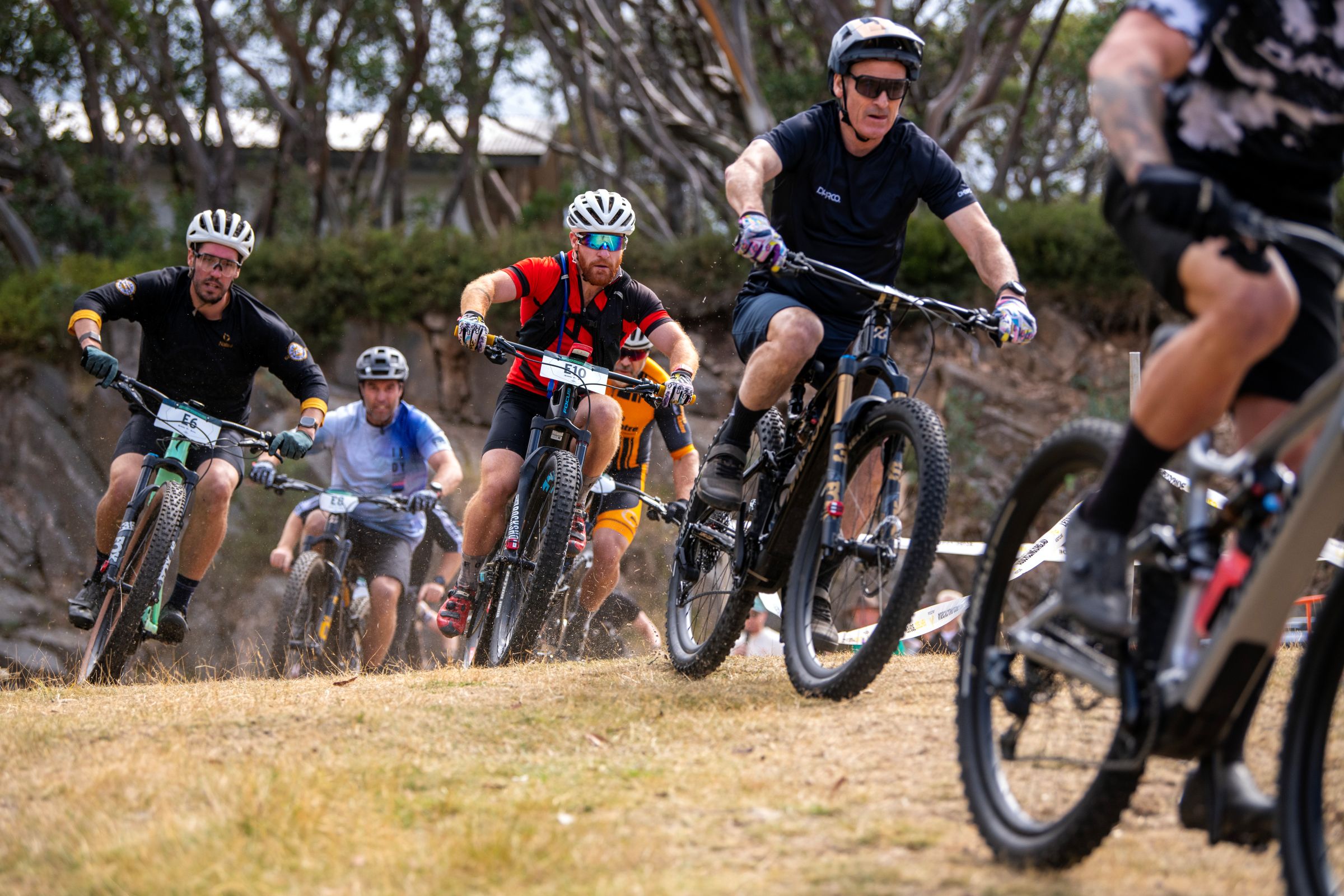
E-MTB is a variation of cross-country or enduro where riders compete on electric mountain bikes: bikes with a battery-powered motor that provides pedal assistance.
How does it challenge you?
As well as the fitness requirements needed for XC and EDR, E-MTB events require you also to think about battery management. You want to engage the motor for the most crucial sections of the race, while saving enough in the tank to complete the course.
E-MTB also makes mountain bike more accessible for riders who, due to a physical impairment or other reason, might not be able to race on a standard MTB.
What gear do you need?
An e-mountain bike that complies with the regulations, such as: the motor provides a maximum of 250 watts and stops providing assistance over 25km/h; it only provides assistance when the rider is pedalling; and a maximum wheel size of 26 inches.
Adaptive mountain biking
What is it?
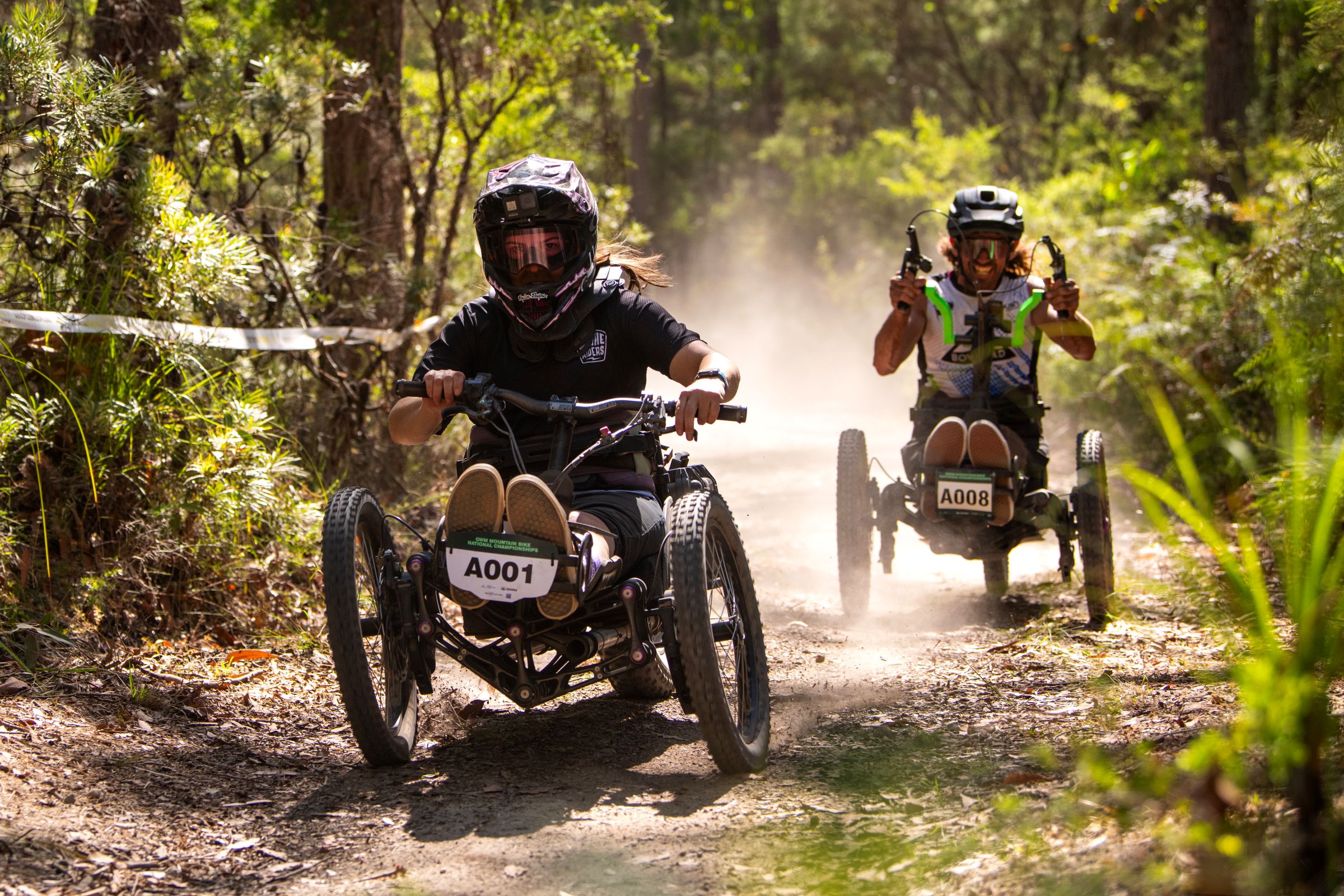
An adaptive mountain bike is a bike that’s modified to fit the specific needs of a rider with physical disabilities. Cross-country, downhill and enduro races can sometimes feature race categories for adaptive bikes on trails that are specifically designed for adaptive use.
How does it challenge you?
Adaptive racing provides access to mountain bike competition for riders with disabilities, or whom otherwise can’t compete on standard two-wheeled, upright mountain bikes.
What gear do you need?
If you ride an adaptive bike, such as a recumbent, a bike with three or more wheels, or a modified upright bike, then adaptive racing might be for you.
Pump Track
.jpg)
Photo: GetSnapt
What is it?
Pump track is a discipline of racing on a specialised track made of rolling bumps and steep turns of various sizes, shapes and configurations.
Instead of pedalling, you propel yourself forward by ‘pumping’ the bike with your body.
Courses are short, with race runs lasting only 20 seconds or so. Riders take turns to ride the course, aiming to set the quickest time – sometimes in a head-to-head knockout format.
How does it challenge you?
Pump track tests your technical skills, pumping technique and cornering ability. It’s a unique discipline where leg speed doesn’t play a factor.
What gear do you need?
Rigid bikes built for speed and nimbleness. Dirt jumpers and BMX bikes fit the bill, and you’ll find a mix of BMX riders and mountain bikers at most pump track competitions.
Getting started? Find a mountain bike club near you to connect with other riders and learn about opportunities to race and ride.
Already racing and considering your next step? Find out whether national level mountain bike racing is for you.
Find an MTB event near you: see the 2027 AusCycling National Mountain Bike Calendar
Photos by Matt Rousu except where otherwise indicated.